

In this seminar, we intend to cultivate diverse reading practices and explore hybrid epistemologies that favor the weaving of situated forms of knowledge. In order to do so, we will take Anna Tsing’s book, The Mushroom at the End of the World, as an invitation to read and discuss in different collective constellations.
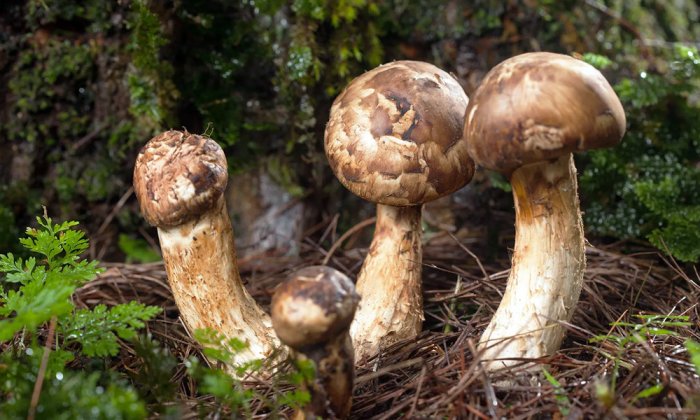
The matsutake mushroom, highly praised in Japanese cuisine, escapes cultivation and grows in environments damaged by human exploitation. In late capitalist times, this mushroom, sought after by foragers around the world, finds itself at the centre of a global trade chain. It is also at the heart of Tsing’s book, published in 2015.
The anthropologist uses the mushroom as a focal point to explore ways of surviving on a damaged planet. Her method of investigation, anchored in detailed descriptions and the weaving of variously situated storylines with the matsutake at their core, aims to move away from an anthropocentric perspective and highlight interspecies co-dependencies. The series of short chapters thus forms a diffracted assemblage that cuts across ecology and social science, paving the way for post-humanist epistemologies.
In this seminar, we propose to identify, trace, analyze, and carefully discuss these different strands as they unfold in the book. We will engage in and experiment with reading practices and formats for collective discussion. Our goal will be not only to reflect on the intricate content and form of the book, but also to ask ourselves: how can we activate further resonances in our own transdisciplinary practices?
The matsutake mushroom, highly praised in Japanese cuisine, escapes cultivation and grows in environments damaged by human exploitation. In late capitalist times, this mushroom, sought after by foragers around the world, finds itself at the centre of a global trade chain. It is also at the heart of Tsing’s book, published in 2015.
The anthropologist uses the mushroom as a focal point to explore ways of surviving on a damaged planet. Her method of investigation, anchored in detailed descriptions and the weaving of variously situated storylines with the matsutake at their core, aims to move away from an anthropocentric perspective and highlight interspecies co-dependencies. The series of short chapters thus forms a diffracted assemblage that cuts across ecology and social science, paving the way for post-humanist epistemologies.
In this seminar, we propose to identify, trace, analyze, and carefully discuss these different strands as they unfold in the book. We will engage in and experiment with reading practices and formats for collective discussion. Our goal will be not only to reflect on the intricate content and form of the book, but also to ask ourselves: how can we activate further resonances in our own transdisciplinary practices?
- Kursanbieter/in: Delphine Chapuis Schmitz
- Kursanbieter/in: Patrick (MTR) Müller